
She Knew What She Wanted
At 85, she knew what she wanted with unusual clarity. Before treatment began, we first made clear what could be changed and what should be preserved.
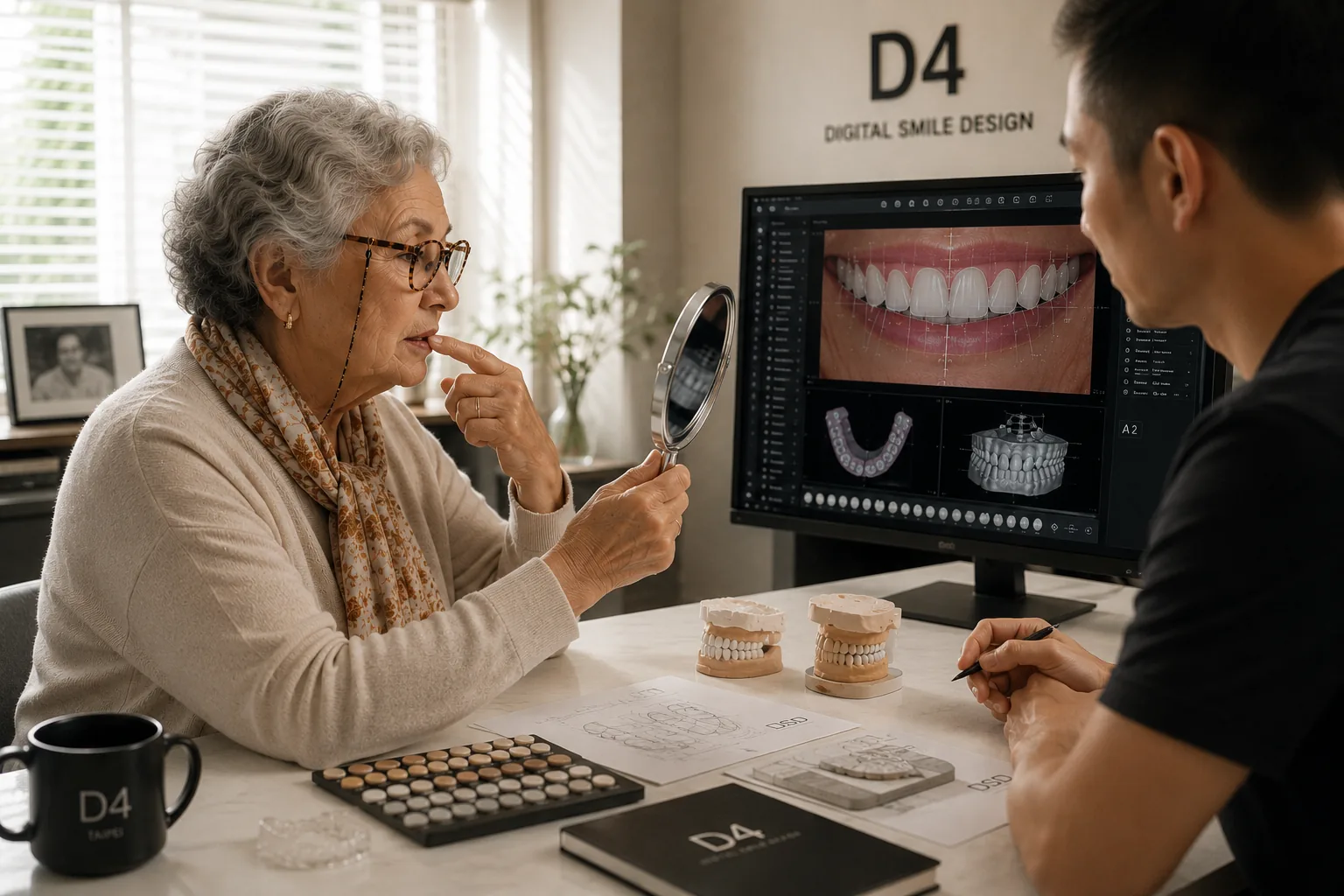
She was 85.
The first time she came to the clinic, her son came with her.
She spoke English slowly, but every sentence was clear.
She was not asking to look younger.
She did not bring a photo and ask for someone else’s smile.
She simply said she wanted her teeth to look a little cleaner, a little more natural.
Not too white.
Not too large.
Not artificial.
And not so different that she could no longer recognize herself.
Many people think the challenge of aesthetic dentistry is to make something look more beautiful.
But sometimes, the real challenge is knowing what not to change.
Her teeth were small.
The color was not the brightest shade.
There were small spaces between some teeth.
But not every detail needed to be corrected.
For her, those subtle imperfections were part of her expression.
If we had made the teeth too white, too even, or too youthful, it might not have been technically difficult.
But it would not have been her smile.
So before treatment began, we spent time communicating.
Not to persuade her into a plan.
But to understand together:
what could be improved, and what should be preserved.
We discussed color.
Instead of choosing a bright white shade, we stayed close to a natural A2.
We discussed shape.
The goal was not to enlarge the teeth, but to create better balance while keeping the feeling of her naturally small teeth.
We discussed the spaces.
Not every gap needed to be closed.
Some spaces affected hygiene and stability. Others were simply part of the natural rhythm of her smile.
We also discussed limitations.
Her tooth structure was limited.
The restorative space was extremely thin.
If we tried to create a more dramatic change by preparing more tooth structure, we might compromise long-term stability.
For an 85-year-old patient, treatment should not feel like an aggressive transformation.
It should feel like a careful refinement.
Preserve more.
Remove less.
Let the restoration quietly belong to her existing expression.
In the following visits, she often came by herself.
Without her son.
Without much hesitation.
She listened carefully to each step and expressed her feelings clearly.
Sometimes she would ask:
“Will this color be too bright?”
Sometimes she would say:
“I would like to keep a little of this.”
These were not small questions.
They showed that she was not passively receiving treatment.
She was participating in her own decision.
That matters to us.
Good communication is not about the dentist explaining everything and the patient simply waiting for the result.
It is about placing the records, design, limitations, and goals together, so the patient can gradually understand the decision being made.
She knew she wanted something natural.
We knew what kind of natural could be achieved with clinical stability.
Those two things had to meet.
During treatment, the hardest part was not creating change.
It was controlling the amount of change.
Thinner.
Lighter.
Less.
These may sound like small decisions, but they shape the final expression.
We wanted her to look in the mirror and not feel as if she had suddenly received a different set of teeth.
We wanted her to feel:
This is still me.
Only more comfortable, cleaner, and more at ease.
On the final day, she looked into the mirror for a long time.
There was no dramatic reaction.
She did not say much at first.
She simply smiled.
It was a quiet smile, but a certain one.
Later, she said:
“Thank you for the beautiful smile.”
We remember that sentence.
Not because it sounded like a perfect ending.
But because before that sentence, there had been many small confirmations, many choices to preserve, and many moments where we chose not to change too much.
Understanding before treatment.
Not to make the process more complicated.
But to make the final result truly belong to the patient.