
Knowledge Center · MOCKUP / CLINICAL PREVIEW
What a Mockup Can and Cannot Tell You
A mockup brings a proposed smile design into the mouth so the patient, clinician, and technician can review appearance, proportion, function, and design direction before treatment.
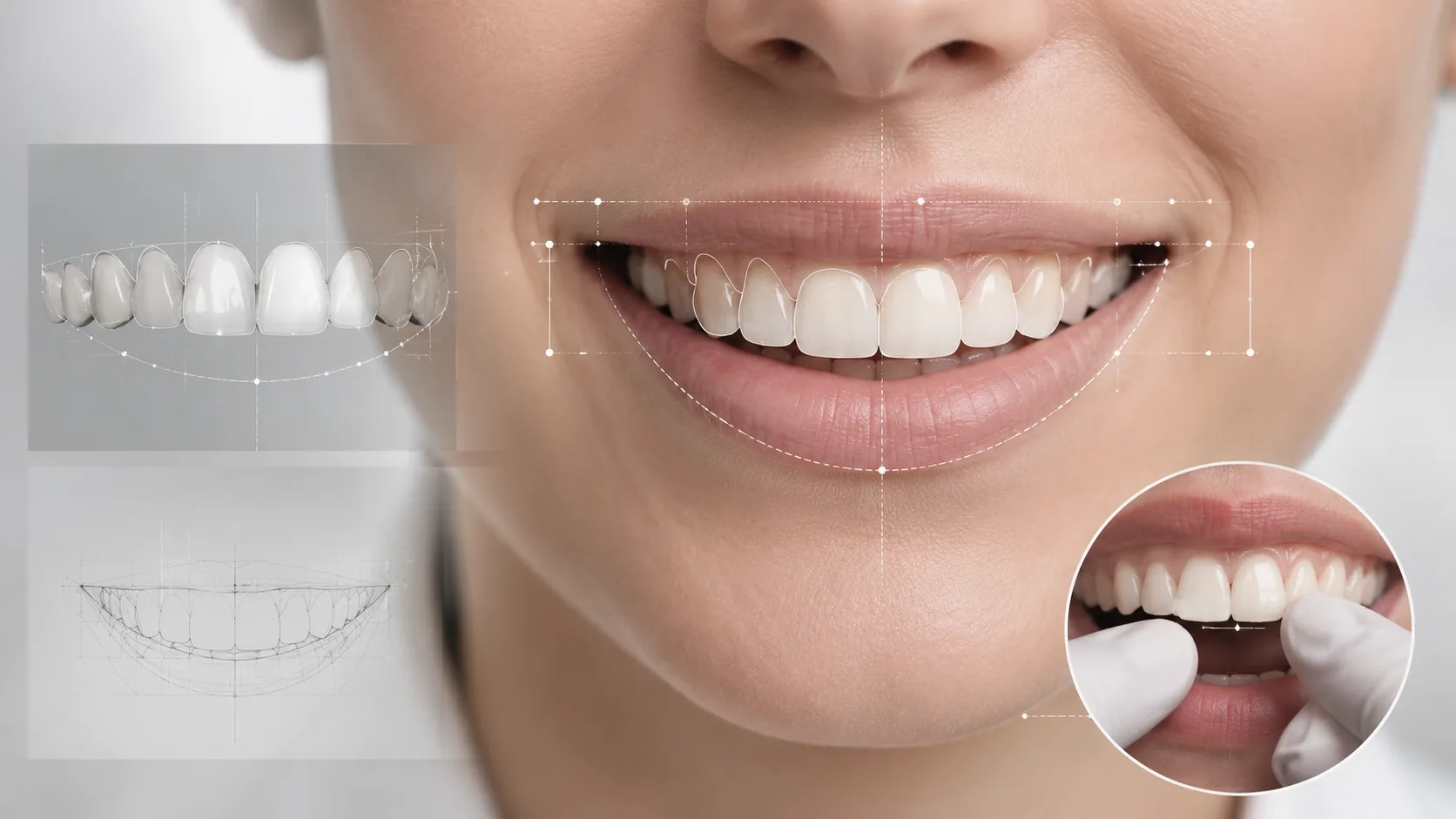
The first time patients experience a mockup, it often feels very direct.
If the teeth are slightly longer, the smile feels different.
If the color is not too white, it may look more natural.
If the tooth shape changes, the lips and facial expression may change too.
That is the value of a mockup.
It takes an idea that exists on a design screen and places it temporarily back into the real mouth and face.
The patient is not only looking at an image.
They can speak, smile, look in the mirror, and feel whether the direction fits them.
A mockup works as a clinical rehearsal: it lets the patient, clinician, and technician experience the design, refine the direction, and move into treatment with a clearer shared goal.
What a mockup can show
The best question for a mockup is not:
“Will the final result look exactly like this?”
A better question is:
Is this direction worth continuing?
A mockup helps the patient and clinician evaluate tooth length, shape, smile line, color direction, lip support, speech, and whether the patient accepts the amount of change.
These things are difficult to judge from a computer image alone.
Teeth are not static objects in a photo.
They are in the mouth.
They move when speaking.
They appear when smiling.
They affect the lips and facial dynamics.
The value of a mockup is bringing the design into real experience.
What a mockup cannot show
A mockup also has limits.
It cannot replace periodontal examination.
It cannot replace occlusal analysis.
It cannot replace evaluation of tooth structure.
It cannot guarantee the exact color, texture, or margins of the final ceramic restoration.
Temporary material and final restorative material are different.
Temporary bonding and final bonding are different.
The oral environment, gum response, and tooth preparation design can all affect the final result.
So if a mockup is treated as a final result preview, misunderstanding can happen.
More accurately:
A mockup is a tool for judging direction. It is not proof of the final outcome.
Why it still matters
Even though a mockup is not the final result, it can reduce uncertainty before treatment.
Sometimes patients believe they want a dramatic change.
Once the mockup is placed, they may feel:
too long.
too white.
too full.
not like themselves.
Finding that before treatment is helpful.
It is much less costly to adjust at the mockup stage than after the final restoration is finished.
The clinician may also see that the design needs revision: the incisal edge may be too long, the proportions too heavy, a region too thick, or speech less natural.
These observations guide design refinement.
How D4 uses mockups
At D4, a mockup is a shared design checkpoint that helps the patient, clinician, and technician make more confident decisions before treatment.
The patient can ask:
Do I like this direction?
Is this too much change?
Do I accept this proportion?
Do I want to preserve more of my original features?
The clinician can ask:
Is the design clinically reasonable?
Is there enough space?
Do length, thickness, or margins need adjustment?
Do the patient's expectations match clinical reality?
The technician can also understand that the final restoration is not only about making something beautiful.
It must serve this person’s face, mouth, and long-term stability.
A mockup turns discussion into direction
A well-planned mockup places the design in the real mouth and gives everyone a practical basis for the next decision.
If it works, we continue.
If it does not, we adjust.
A mockup makes the direction tangible before treatment, while diagnosis, clinical conditions, materials, and long-term maintenance guide the final execution.
At D4, this process makes choices clearer and connects digital design with real clinical decisions before treatment begins.
If you are considering veneers, you may also read: Do Veneers Always Require Tooth Preparation?
FAQ
What is a veneer mockup?
A veneer mockup can be understood as a clinical preview before treatment. Based on the design plan, the clinician places temporary material on the surface of the patient's teeth to approximate the future tooth shape, allowing the patient to see tooth length, proportion, smile line, and overall harmony before real treatment begins. It is not simply looking at a digital image. It places the design into the real mouth for observation. Through the mockup, the clinician and patient can evaluate speech, smiling, lip support, tooth thickness, and facial harmony together.
Why is a mockup done before veneer treatment?
A mockup is done before veneer treatment to confirm the design direction before the teeth are actually treated. Veneers are not only about making teeth whiter. The clinician also needs to evaluate tooth length, width proportion, smile line, lip support, gum margin, bite space, and overall naturalness. A mockup allows the patient to preview a result close to the proposed treatment and allows the clinician to check whether the design fits the real oral conditions. If the mockup stage shows that the teeth look too long, too thick, unnatural when smiling, or difficult to clean, the plan can be adjusted before definitive treatment begins.
Does making a mockup require tooth reduction?
Most pre-treatment mockups do not require tooth reduction first. Temporary material is usually placed on the existing tooth surface to observe the design direction and support communication. Whether any local adjustment is needed depends on tooth alignment, bite space, existing restorations, and the design goal. It is important to understand that a mockup itself is not definitive treatment, and it does not mean the final treatment will require no tooth preparation. Its purpose is to help the clinician judge whether tooth structure needs to be adjusted, whether orthodontics should come first, whether the design should change, or whether the expected shape change should be reduced.
Is a mockup the same as temporary teeth or trying in veneers?
A mockup is not the same as formal temporary teeth, and it is not the final try-in of veneers. It is usually done before treatment, using temporary material to quickly show the design direction. The focus is tooth shape, smile proportion, and facial harmony. Formal temporary teeth are more commonly used after teeth have already been prepared, to protect the teeth, maintain appearance, and wait for the final restoration. Many patients describe a mockup as trying in veneers, which is easy to understand but not fully accurate. A mockup tests the design direction, not the final material, color, or margin precision.
Will the mockup look exactly the same as the final veneers?
A mockup can help preview the direction, but it cannot guarantee that the final veneers will look exactly the same. Mockups use temporary material, so color, translucency, surface texture, margin precision, and long-term stability are different from the final restorations. The final result is also influenced by tooth condition, material selection, laboratory work, gum status, and clinical bonding. More accurately, a mockup is an important verification step before treatment, not an absolute copy of the final result. A good workflow tries to keep the design, mockup, and final restoration consistent, while still making necessary adjustments based on real oral conditions.